7 HR Software Alternatives with Source Code Access
Reading Time:
Reading Time:

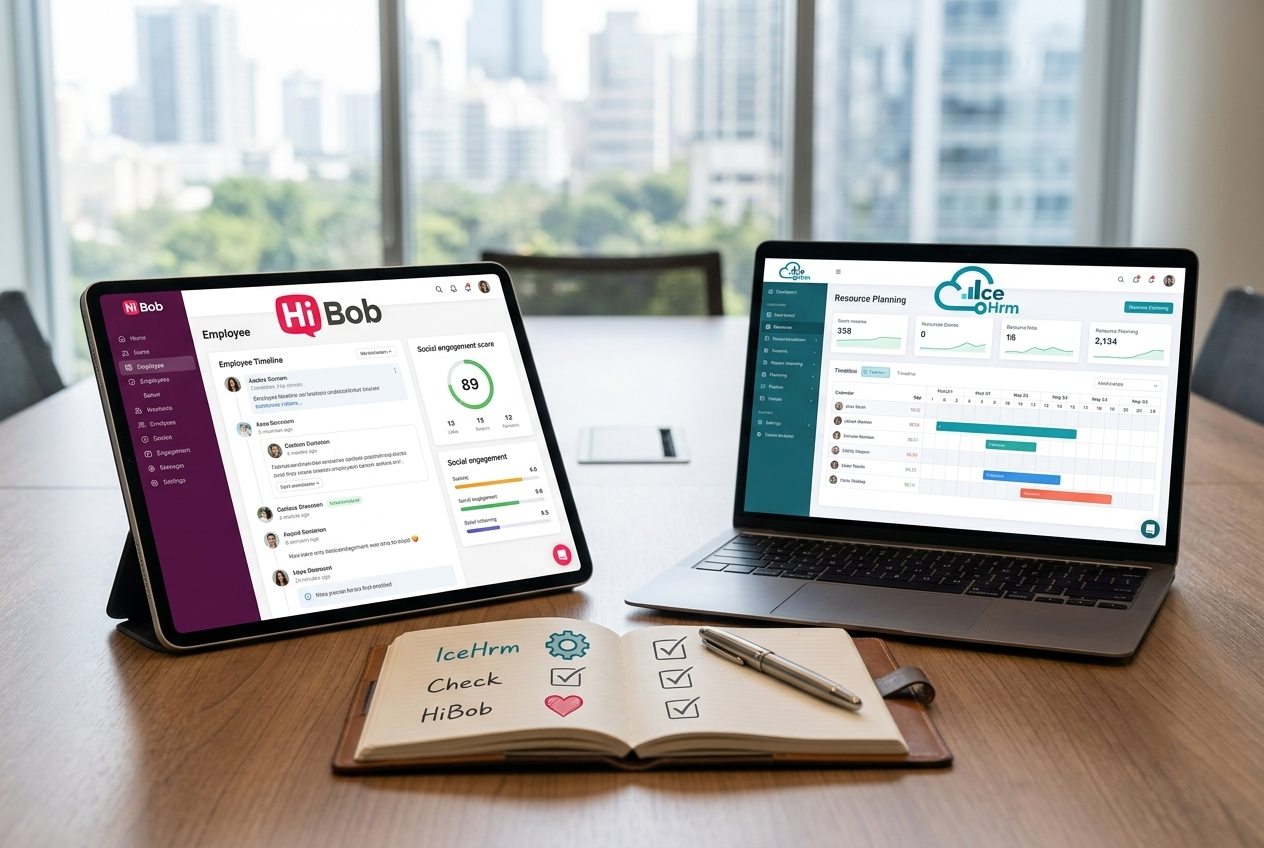
Quick answer: If you want HR software you can audit, self-host, and fully own — instead of renting a black-box SaaS — these are the 7 best HR software alternatives with source code access in 2026: IceHrm, OrangeHRM, Frappe HR, Odoo Employees, Dolibarr, TimeTrex, and Bitrix24. IceHrm leads the list because it pairs a free open-source HR core with two clear upgrade paths: the IceHrmPro perpetual license for teams that want to own the code outright, and managed cloud hosting for teams that want source-available flexibility without running servers.
In the modern digital landscape, the "black box" nature of standard SaaS platforms is increasingly viewed as a liability by technical leaders and organizations in regulated industries. When you sign up for a typical cloud-based HR system, you are essentially renting space in a landlord’s building. You have no control over the underlying infrastructure architecture, limited access to your raw database files, and zero ability to modify the core functionality to meet your company’s unique compliance or operational needs.
For CTOs, technical founders, and security-conscious organizations that prioritize data sovereignty and compliance, the ability to audit, modify, and own the underlying source code of their Human Resources Information System (HRIS) is not just a luxury—it is a strategic prerequisite. (If you are new to the model, this complete guide to self-hosted HR software and our data sovereignty buyer's guide are good starting points.) When you control the code, you control your corporate destiny.
Whether you need to build custom payroll logic, integrate niche security protocols, or ensure your PII (Personally Identifiable Information) never leaves your physical perimeter, the following seven open-source and source-available HR platforms give you the code access you need to reclaim operational sovereignty.
| Platform | Source code access | License model | Hosting options | Best fit |
|---|---|---|---|---|
| IceHrm | Yes — open-source core | Free core + IceHrmPro flat-fee perpetual license | Self-host, cloud hosting, or fully managed | Teams that want code ownership without a DevOps burden |
| OrangeHRM | Starter edition only | Open-core; advanced tiers proprietary | Self-host (LAMP/WAMP) or cloud | Basic self-hosted personnel records |
| Frappe HR | Full (AGPL-3.0) | Open-source | Self-host or Frappe Cloud | ERP-integrated teams with DevOps capacity |
| Odoo Employees | Community modules | Open-core; many features Enterprise-only | Self-host or Odoo cloud | Existing Odoo ERP users |
| Dolibarr | Full (native PHP) | Open-source | Self-host | Lightweight SMB ERP + basic HR |
| TimeTrex | Community edition | Open-core | Self-host or cloud | Complex attendance & payroll compliance |
| Bitrix24 | On-premise commercial | Proprietary (paid self-host) | On-premise or cloud | Intranet + collaboration + HR bundle |
IceHrm has emerged as the definitive standard for organizations that value the balance between complete IT control and intuitive, user-friendly workforce management. Unlike proprietary systems that lock you into escalating subscriptions forever, IceHrm offers a powerful, highly flexible open-source HR framework core that is perfect for internal development teams who want to build custom extensions from a stable base — see how to customize open-source HR software for your workflows for a practical walkthrough.
The true value proposition here lies in the flexibility of the ownership model. For scaling organizations that want to break free from recurring monthly costs, the IceHrmPro enterprise perpetual license lets you secure an enterprise-grade platform for a flat, one-time fee. This model eliminates the hidden "success tax" that punishes growing businesses as their headcount increases — and if you would rather not manage servers at all, IceHrm's managed cloud hosting gives you the same source-available platform fully maintained for you.
"Self-hosting is the functional difference between renting a room and owning the building. With direct source-code access, you aren't blindly trusting an external vendor's security certificate; you are applying your own corporate-grade security protocols directly to your sensitive employee data."
If your specific HR workflow requires unique feature adjustments, you can easily purchase individual premium HR modules to extend your platform's capabilities as you scale. If your internal engineering team is stretched thin, IceHrm also offers a full spectrum of technical support, ranging from expert HR software professional services that design tailor-made system architectures, to high-performance cloud hosting packages and fully managed HR environment deployments that keep your platform secure without adding server maintenance overhead to your internal staff. Ready to go live? Follow our complete IceHrm production hosting guide.
OrangeHRM remains a long-standing option in the open-source HR ecosystem. Their "Starter" edition is a free open-source download designed for tech-savvy teams comfortable deploying and managing their own LAMP or WAMP stack. It provides a stable, time-tested foundation for core personnel management and basic record-keeping.
However, technical buyers should carefully evaluate the divide between the community version and their proprietary offerings. While the source code is available for the basic version, scaling into advanced enterprise features—such as complex payroll algorithms or advanced localized reporting—frequently requires transitioning to their proprietary "Advanced" or "Enterprise" cloud tiers. It remains an excellent trial platform, but verify whether your long-term roadmap can withstand moving away from a pure self-hosted model. (Weighing your options? See our roundup of the top 10 OrangeHRM alternatives in 2026.)
Built on the robust Frappe Framework—the same technology that powers the popular ERPNext suite—Frappe HR is a developer’s dream. Released under the AGPL-3.0 license, it grants technical teams full permission to review, audit, and modify the underlying code to match complex internal requirements.
Because it is designed on a modular framework, it excels in organizations where human resources must communicate seamlessly with accounting, inventory control, and project billing systems. However, buyers should prepare for a steeper technical cost of entry. Because the architecture is highly integrated, it requires a significant initial investment in server configuration and ongoing maintenance if you choose to host it independently. It is an operational powerhouse, but it demands dedicated internal DevOps resources to run effectively. (For a side-by-side breakdown, read IceHrm vs Frappe HR: open-source HR modules compared.)
Odoo is a major player in the open-source ERP world. The Community Edition provides clear access to essential HR modules, including leave management, attendance tracking, and employee directories. It is highly extensible and benefits from a massive global community of third-party developers contributing plugins.
The primary trade-off is the strict "Community vs. Enterprise" feature split. Many high-value corporate utilities—such as full mobile application support, advanced predictive workforce analytics, and complex country-specific payroll integrations—are locked behind Odoo Enterprise, which operates on a proprietary license. For companies already utilizing Odoo for their entire business backend, the HR module is a logical addition, but it may feel overly complex compared to specialized open-source HRMS solutions like IceHrm.
Dolibarr is an all-in-one software suite covering ERP, CRM, and basic HR workflows. It is highly modular and remarkably lightweight, making it an excellent alternative for small-to-medium businesses that want to avoid the heavy resource footprint of massive enterprise architectures.
Because it is written natively in PHP, it is straightforward for internal web developers to customize, and the community-driven digital store offers a variety of add-ons to fill regional gaps. It offers clean code transparency, though the user interface can feel somewhat dated compared to modern web apps. It is a reliable workhorse, but expect to budget for internal frontend tweaks if your HR staff requires a contemporary user experience.
If your organization's primary operational bottlenecks revolve around complex attendance tracking, shift scheduling, and granular payroll compliance, TimeTrex is a specialized powerhouse. Available as an open-source community edition, it features capabilities often missing from generalist tools, such as automated overtime calculations, localized tax engines, and labor law compliance tracking.
TimeTrex is highly valued in regions with complex hourly labor structures because it prioritizes rule-based stability. However, users should note that the administrative setup configuration for its calculation engine is highly complex. You are managing an intricate financial tool rather than a simple database. Ensure your IT team has the time and capacity required for advanced initial configurations.
Bitrix24 offers a self-hosted "on-premise" commercial version that allows enterprise organizations to install the software directly onto internal servers behind corporate firewalls. It positions itself as a social intranet and collaboration hub with integrated HR helper applications.
While it provides direct access to the source code for deep backend customizations, the overall platform architecture is massive. You are deploying a sprawling collaboration ecosystem rather than an isolated human resource utility. For companies looking to bundle internal chat, project tasks, document storage, and employee records into a single digital workspace, it is a formidable choice, but it can be overwhelming if you simply require focused HR management.
Once you have decided you want source-code-level control, the practical question becomes how you want to run it. IceHrm gives you two paid paths, and the right one depends on whether you want to operate the servers yourself:
Either way, you escape the per-seat "success tax" of mainstream SaaS HR. Still deciding between owning and outsourcing the infrastructure? Our guide on self-hosted HR vs private cloud HR breaks down the trade-offs in detail.
When selecting an open-source or source-available HR solution, buyers must look past the "free download" banner and calculate the true Total Cost of Ownership (TCO). A platform that costs nothing to download but requires thousands of dollars in consultant fees or months of engineering time to modify is not truly cost-effective. (We break the numbers down in the true cost of self-hosted HR software and this self-hosted HR pricing guide.)
For teams seeking speed to market without sacrificing software control, IceHrm offers an ideal middle path. You maintain access to the code, but you have the flexibility to offload deployment complexities. By leveraging dedicated implementation and deployment services for initial setups, you capture the security of an independent database without overburdening your internal team.
Choosing between buying custom add-on modules to bridge targeted feature gaps or opting for the all-inclusive commercial IceHrmPro license lets you align your software investments precisely with your current operational budget. You never pay for unneeded enterprise bloat, and your overhead remains completely predictable.
Ultimately, the choice to deploy a source-code-accessible HR system is about insulation against vendor lock-in and unexpected subscription price spikes. Whether you install your system on physical hardware or utilize secure cloud infrastructure packages to keep your data isolated, owning your core HR stack ensures a more resilient, self-reliant corporate infrastructure.
Yes. IceHrm offers a free, open-source core that you can download and self-host with full source code access. Paid options—the IceHrmPro perpetual license and managed cloud hosting—add enterprise features, premium modules, and support on top of that core.
IceHrmPro is a one-time perpetual license you self-host and fully control, ideal when you need the source code and data inside your own infrastructure. IceHrm Cloud is fully managed hosting where IceHrm runs, updates, and secures the platform for you, ideal when you want source-available flexibility without operating servers.
Yes. The open-source core gives you source code access to audit, modify, and extend the system, and IceHrmPro builds on that same base with premium modules and enterprise capabilities.
The open-source core is free. IceHrmPro is a flat, one-time license fee with no per-user subscription, and managed cloud hosting is a predictable hosting package. For broader market context, see our complete 2026 HR software pricing guide.
Platforms with full source-code access and self-hosting—like IceHrm—let you keep PII inside your own perimeter and apply your own security controls, which is why they suit regulated sectors. Read more on why self-hosted HR software makes sense for regulated industries.