What is Self-Hosted HR Software? Complete Guide for 2026
Reading Time:
Reading Time:
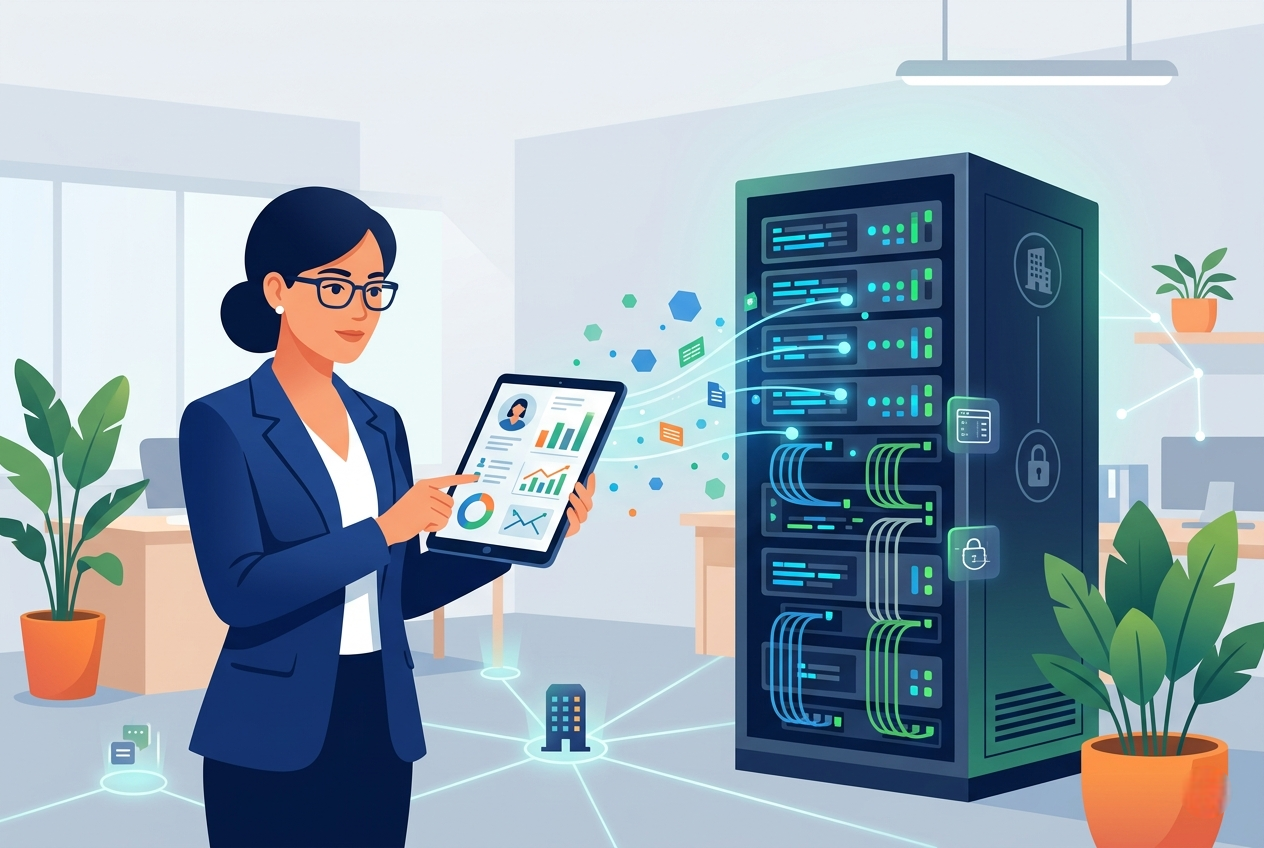
In the rapid evolution of 2026, the HR landscape is caught between two worlds: the convenience of the cloud and the necessity of control. While most companies have spent the last decade moving their data to "someone else's computer," a growing wave of strategic HR leaders is rediscovering the power of self-hosted HR software.
But what exactly does it mean to "self-host" in an era of 5G and AI-driven workflows? This guide explores why sovereignty is making a comeback and how it transforms the way businesses manage their most sensitive asset—their people.
At its simplest, self-hosted HR software (often called on-premise or onsite HRIS) is a system that you install, manage, and run on your own private infrastructure. Unlike a standard SaaS (Software as a Service) platform where you pay a monthly fee to access a shared portal, self-hosting gives you the "keys to the kingdom."
"Self-hosting is the difference between renting a hotel room and owning the building. In a hotel, you can’t move the walls or change the security system; in your own building, you decide who enters and where the data lives."
In 2026, this doesn't costly mean a dusty server in a broom closet. Modern self-hosting typically happens in a Private Cloud—using your company’s dedicated space on AWS, Azure, or Google Cloud—ensuring you get the performance of the cloud with the privacy of a walled garden.
Why would a 200-person company choose the responsibility of self-hosting over a "plug-and-play" cloud tool? It usually comes down to three non-negotiable pillars:
In an era of increasing GDPR, CCPA, and regional labor laws, where your data sits is a legal liability. Deploying a secure on-premise HRIS deployment allows you to keep PII (Personally Identifiable Information) entirely within your jurisdiction. You aren't just trusting a vendor's security certificate; you are applying your own corporate-grade firewalls and encryption protocols to your central secure employee record database.
Most cloud HR tools charge "Per Employee, Per Month" (PEPM). This creates a "Success Tax"—the more you grow and hire, the more your software bill punishes you.
Cloud platforms are "multi-tenant," meaning everyone uses the same code. If you need a unique payroll logic or a custom field for a specific industry, the vendor might say "no." With a self-hosted, source-available system, you can utilize our professional HR development services to rewrite parts of the engine or purchase modular HRIS feature extensions to tailor the system to your exact workflow.
Self-hosting isn't a one-size-fits-all approach. Depending on your IT maturity, you might choose one of three paths:
When evaluating self-hosted HR software, you must look at the Total Cost of Ownership (TCO). While cloud software has lower "upfront" costs, the long-term math often favors self-hosting for any company planning to exist for more than 18 months.
Most mid-market SaaS HRIS platforms in 2026 average $8 to $15 per employee. For a 250-employee company, that is a minimum of $24,000 every single year, forever.
"By the end of Year 2, a self-hosted system has typically paid for itself five times over compared to a standard SaaS subscription."
Despite the immense cost savings, self-hosting requires a different structural mindset. Ask your team these three questions:
IceHrm has become the 2026 standard for this movement because it bridges the gap between "Hardcore IT" and "User-Friendly HR." It offers a fully functional enterprise open-source HR software core for teams that want to build or audit from scratch, alongside a powerful upgraded commercial edition that features:
For companies that love the "Self-Hosted" philosophy but don't want to manage the underlying servers, IceHrm's fully managed cloud HR platform provides a private, secure environment where the software instance is strictly yours, but the technical deployment overhead is completely handled by our team.
In 2026, self-hosted HR software is no longer a legacy choice—it is a strategic one. It is for the organization that wants to own its digital infrastructure, protect its employee privacy at the highest level, and stop paying a "growth tax" to Silicon Valley.
Ready to explore a sovereign HR future?
Are you looking to migrate away from a high-cost PEPM provider, or are you building your first unified HR system from the ground up? Let us help you take back control.