

According to Gallup, global employee engagement fell to 21% by 2024 – only the second decline in the past twelve years. This decrease is estimated to have cost the world economy 438 billion USD in productivity losses, and 20% of employees reported feeling lonely the day before.
The data paints a sobering picture: workplace well-being is suffering, and companies could feel the consequences. But there is also an opportunity: these statistics highlight the importance of a strong corporate culture based on clear, actionable values, prioritizing well-being, and fostering more connected teams.
When employees identify with the mission and values of their company (and new employees are onboarded accordingly), they are more engaged, productive, and satisfied with their work. Conversely, a lack of alignment between personal and company values can lead to demotivation, declining morale, and higher turnover.
In this article, we present 15 key corporate values that can serve as a foundation for a successful company culture. We also show how the development and embedding of these values can increase employee engagement, align teams with company goals, and contribute to long-term success.
Why Company Values Are Important
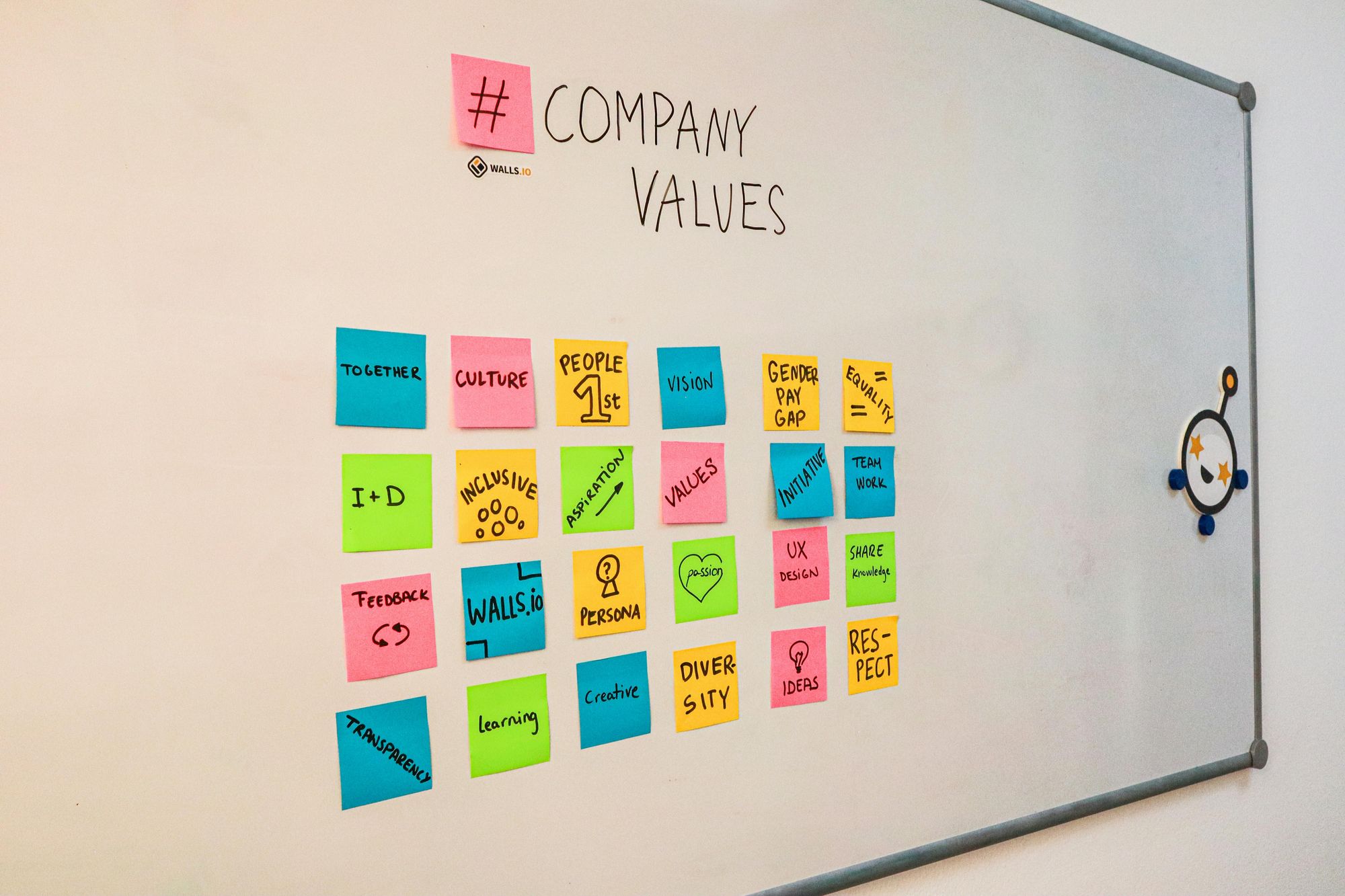
Company values are more than just words on the wall. They are the guiding principles that shape every aspect of your business. When clearly defined and consistently applied, these values influence hiring decisions, day-to-day operations, and long-term strategies, creating a strong and meaningful work environment.
When companies implement people-centered values—such as vision, ethics, work ethic, and customer focus—it positively impacts their financial performance. Companies that showcase their visions and values on their website and present a more detailed vision along with additional company values also have better chances of higher placement in the Fortune 1000.
- Increase Employee Retention: Employee retention reached a low in 2024, with only 31% of employees reporting feeling connected to their work. Engaged employees are more productive, satisfied, and committed to their tasks. Align your hiring practices with company culture and values to promote employee retention from the start.
- Alignment with Company Goals: Values provide a framework for decision-making and ensure that actions at all levels align with the company's mission and goals. By integrating values into daily work, you strengthen alignment and promote business success.
- Attracting and Retaining Talent: Strong company values attract candidates who can identify with your culture. This leads to a better fit and lower turnover. Company culture is also a key factor in retaining top talent.
- Increasing Profitability: Companies with clear values often achieve better financial results due to higher employee motivation and customer satisfaction. Studies have shown that engaged employees contribute to higher profitability and productivity.
15 Values for a Successful Company Culture
Building a strong corporate culture begins with defining values that shape the behavior, decisions, and work ethic of your team. Below, we present 15 core values that have the potential to fundamentally transform a workplace environment.
1. Integrity
Integrity forms the foundation of any strong organization. When your team understands and practices honesty and transparency, it leads to trust, shared goals, and consistent decision-making. Encourage an open communication culture where honesty is valued, integrity is assessed during the hiring process, and mistakes are seen as learning opportunities. Even large, multinational companies like Amazon build trust by promoting integrity in their dealings with customers and employees.
2. Innovation
Promoting innovation empowers employees to contribute new ideas and solutions, thereby securing the competitiveness and future viability of your company. Create an environment where experimentation is encouraged and employees are motivated to do the right thing as part of the learning process. Companies like Google actively foster innovation by providing their employees with the space and opportunities to develop creative solutions.
3. Collaboration
Through collaboration, employees can leverage different skills and perspectives to achieve better results. Promote cross-functional teams and organize team-building activities to strengthen collaboration.
4. Accountability
A culture of accountability ensures that every employee takes responsibility for their actions. This leads to better performance and more trust. Set clear expectations and provide regular feedback so that your employees stay on track.
5. Respect
Respect creates an inclusive environment where every employee feels valued and heard. Lead by example – treat others with respect and encourage your employees to do the same in all interactions. Cultures characterized by inclusion and respect foster psychological safety, allowing employees to reach their full potential and deliver peak performance.
6. Customer Orientation
A customer-oriented approach ensures that your company is always focused on customer needs, thereby promoting customer loyalty and long-term success. Regularly collect customer feedback and use it to guide product development, the company's mission, and service improvements.
7. Diversity and Inclusion
Valuing diversity and promoting inclusion leads to more creative and innovative teams and ensures that everyone feels welcome and appreciated. Companies like Adobe have firmly integrated diversity and inclusion into their business processes, thereby fostering a culture of belonging.
8. Sustainability
Sustainability is not limited to environmental compatibility; it also includes creating long-term value for stakeholders and society, as well as demonstrating your commitment to corporate social responsibility (CSR). Integrate sustainability goals into your business processes and involve your employees in environmental initiatives.
9. Excellence
The pursuit of excellence motivates employees to perform at their best and fosters continuous improvement in all areas of business. Companies that prioritize excellence can rely on their teams to be innovative and deliver high-quality work.
10. Empathy
Empathy in the workplace allows employees to connect more deeply with one another, build closer relationships, and create a more supportive environment. Offer empathy training to leaders so they can better understand and respond to the needs of their employees.
11. Adaptability
Adaptability ensures that your team can respond flexibly to new challenges, market changes, or external pressures, helping businesses remain competitive. Companies like Microsoft focus on adaptability and encourage their employees to succeed in a constantly changing environment.
12. Transparency
When leadership is open about the company’s direction, performance, and challenges, employees feel more connected to the company mission. Share important business developments and performance metrics with the entire team to promote alignment and create a sense of involvement.
13. Work-Life Balance
A balanced work-life situation helps employees prevent burnout and remain productive and healthy in the long term. Offer flexible working hours, wellness programs, and vacation policies to support employees in balancing their professional and personal lives.
14. Fun
A pleasant working environment increases motivation, promotes creativity, and strengthens team cohesion. Incorporate team-building activities, joint events, or well-designed office spaces to create a more relaxed and positive work atmosphere.
15. Learning and Development
A comprehensive learning and development program helps companies stay innovative and ensures employees remain competitive. Provide access to training programs, mentoring opportunities, and career development resources (and track the results as a metric) to support the personal and professional growth of your employees.
A set of well-defined, actionable company values is the cornerstone of a resilient corporate culture, directly impacting employee engagement and long-term financial success. These 15 values, from Integrity to Learning and Development, must be more than just statements—they must be woven into the daily fabric of the organization. IceHrm provides the vital infrastructure to operationalize many of these core values. By utilizing IceHrm's Performance Management module, companies can ensure Accountability and Excellence through goal tracking and regular feedback. Furthermore, the Learning Management System (LMS) supports the value of Learning and Development by tracking employee growth and ensuring skill alignment with the company's vision. By embedding values like Respect and Transparency into daily HR workflows via IceHrm, companies guarantee that their guiding principles are not just aspirational, but actively practiced and reinforced.