
HR Software for Hospitality Industry: 2026 Buyer's Guide
Reading Time:
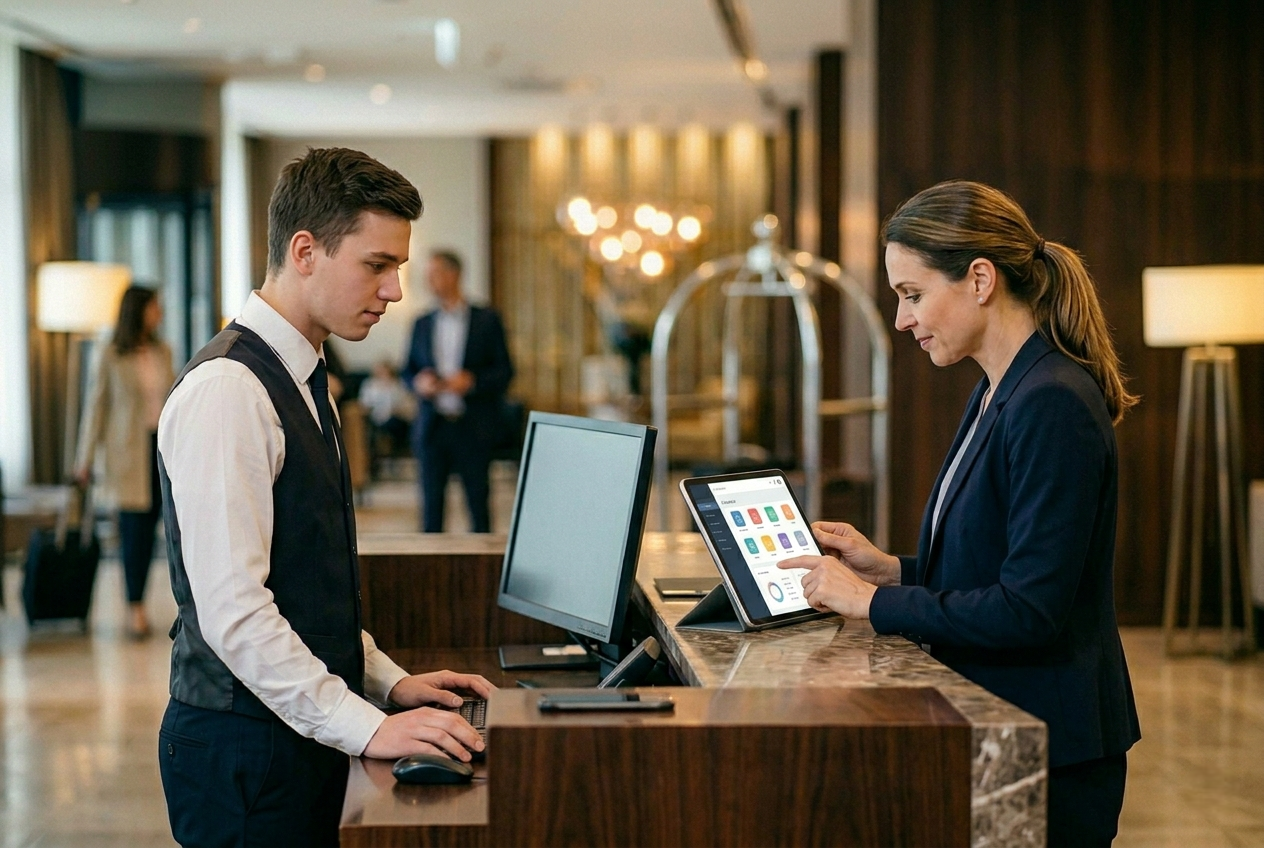
The hospitality industry operates on a completely different rhythm than the rest of the business world. While a standard corporate office manages predictable nine-to-five schedules, a hotel or restaurant group deals with 24-hour shift rotations, complex multi-property coverage, fluctuating seasonal demand, and intricate tip pooling rules.
When managing teams in this fast-paced environment, using a standard, generic human resource platform can quickly lead to operational friction. A single breakdown in communication or an error in scheduling can lead to understaffed kitchens, burnt-out front desk agents, or expensive local compliance penalties.
Selecting the ideal HR software hospitality platform requires a deep look at how a system handles the unique realities of service-oriented workforces. True operational efficiency comes down to balancing flexible labor tracking with a cost-effective system structure that won't drain your thin operating margins.
To successfully manage a service-driven workforce, an international human resource platform must handle four central operational challenges smoothly.
Whether you are scaling up your front-of-house staff for summer tourist rushes or onboarding temporary housekeepers for winter ski seasons, hospitality demands rapid staffing flexibility. The onboarding system must process dozens of seasonal workers quickly, handle electronic document signatures seamlessly, and easily deactivate accounts when contracts end without breaking historical payroll records.
For hospitality brands managing multiple restaurant locations or boutique hotels, cross-property transparency is essential. Managers need a unified view to track employee transfers across properties, share shift coverage between locations, and prevent accidental overtime compliance violations when an employee works at two separate venues in the same week.
The traditional method of printing out weekly schedules and taping them to an office wall is completely outdated. Modern hotel restaurant HR setups require digital shift management that lets employees trade shifts dynamically through a mobile portal, set precise availability windows, and log hours on secure digital time clocks.
Managing gratuities involves navigating complex local labor regulations. Software must do more than just record tips; it needs to accurately calculate hours worked against tip pool ratios, split credit card gratuities fairly among support staff, and process direct payroll calculations without requiring manual spreadsheet data entry.
To address these unique operational needs, several niche cloud providers offer targeted, industry-specific solutions.
7shifts is a widely used workforce management application designed specifically for restaurants, focusing heavily on drag-and-drop scheduling and team communication.
Harri provides an enterprise-focused workforce management suite tailored specifically for large hospitality groups, hotel chains, and premium restaurant portfolios.
While specialized hospitality cloud platforms provide helpful niche features, their underlying subscription models often introduce long-term financial challenges for growing brands.
"In the hospitality world, where profit margins are famously thin, paying software fees that scale with your headcount means your technology bill spikes during peak seasonal rushes—precisely when you need to keep operating costs predictable."
Most cloud providers utilize a Per-Employee-Per-Month (PEPM) or per-location subscription structure. For a seasonal hotel group that scales up from 40 permanent staff to 150 employees during peak tourist months, their monthly software bill instantly triples. This structure creates a financial penalty for expanding your seasonal team.
For hospitality operators who want full control over their data, long-term cost predictability, and custom workflows, utilizing a self-hosted modular architecture is an exceptionally smart alternative.
Instead of paying high, recurring monthly subscription fees to an external vendor, investing in a perpetual commercial license to purchase IceHrmPro allows you to own your core human resources system outright. For a clear, one-time flat fee, your business gains a permanent software engine that can be deployed across your entire multi-property portfolio without any per-employee monthly charges.
+-----------------------------------------------------------------------+
|                  THE ARCHITECTURAL ICEHRM ADVANTAGE                   |
+-----------------------------------------------------------------------+
|                                                                       |
|   [Core Directory Asset] ---> Deploy via Private Cloud Hosting        |
|                          ---> Selectively Add Specialized Modules     |
|                          ---> Achieve 100% Core Data Ownership        |
|                                                                       |
+-----------------------------------------------------------------------+
By choosing a self-hosted open architecture, your team can deploy the platform on a secure private cloud via standard hosting setups, giving you full ownership over your highly sensitive employee banking information, payroll history, and performance files.
This modular structure allows your operational dashboard to remain incredibly clean, light, and easy for your team to use. Instead of dealing with bloated, over-complicated software interfaces, you can choose to buy IceHrm modules individually to assemble the exact toolset your hospitality business requires.
Deploying a core HR infrastructure across a distributed network of hotels or restaurants requires reliable technical execution. To ensure a smooth transition from legacy platforms or paper forms, you can leverage specialized professional services to align the system with your unique company workflows.
Partnering with experienced professional services allows you to build custom localized reporting tools, connect the platform directly with regional banking systems, or design unique onboarding flows tailored specifically to your brand's standards.
For hospitality groups that want the data security of an isolated engine but prefer not to handle everyday server maintenance internally, moving your system to a dedicated managed cloud tier offers an excellent balance.
+-----------------------------------------------------------------------+
|                    MANAGED CLOUD DEPLOYMENT PROFILE                   |
+-----------------------------------------------------------------------+
|                                                                       |
|   - Single-Tenant Data Isolation (Absolute Security)                  |
|   - Automated Data Backups & Continuous Optimization                  |
|   - 100% Freedom From Unpredictable Monthly Per-User Fees             |
|                                                                       |
+-----------------------------------------------------------------------+
Migrating your workflows to a secure managed cloud environment gives your management team the hands-off convenience of a traditional SaaS application, while completely protecting your bottom line from unexpected pricing spikes during high-volume seasonal hiring.
Deciding on the ideal software structure for your hospitality group requires carefully balancing your operational needs with long-term financial sustainability.
If you run a single restaurant location with minimal technical support and prefer to pay a recurring fee for niche point-of-sale integrations, a per-site tool like 7shifts is a practical choice.
However, if you manage a scaling multi-property hospitality group, a boutique hotel brand, or a security-conscious enterprise, relying on a shared cloud vendor can quickly introduce high recurring fees and limited system control. Building your human resources framework on a dedicated, open-source or flat-fee foundation ensures full system adaptability, total data sovereignty, and massive long-term financial savings.
The modern hospitality market demands absolute operational flexibility, tight cost controls, and uncompromising data protection. While niche cloud subscriptions offer an easy entry point, they frequently introduce compounding monthly fees and rigid system restrictions that complicate long-term business growth. By constructing your corporate people workflows on an adaptable, self-hosted foundation, you insulate your company from escalating software costs today while giving your entire multi-property brand the absolute freedom to expand securely tomorrow.
True operational excellence in hospitality is achieved not by renting rigid tools from external vendors, but by building a reliable, independent infrastructure that belongs entirely to your business.