HR Software for Australian Businesses: 2026 Comparison
Reading Time:
In the high-stakes Australian business landscape of 2026, HR software is no longer just a digital filing cabinet. With the "Payday Super" reforms taking effect on July 1, 2026, and the ever-present complexity of Fair Work Modern Awards, your choice of HRIS (Human Resources Information System) can be the difference between a thriving workforce and a devastating audit from the Fair Work Ombudsman.
For years, the Australian market has been dominated by a Software-as-a-Service (SaaS) monopoly. While platforms like Employment Hero and ELMO have revolutionized convenience, they have also introduced a hidden "Success Tax"—a pricing model where your software costs balloon every time you hire a new team member.
As we navigate 2026, a new priority has emerged: Digital Sovereignty. Whether you are a Perth-based mining operation requiring air-gapped security or a Sydney tech firm tired of recurring monthly bills, this guide compares the industry heavyweights and explores why self-hosting your HRIS is the most strategic move of the year.
The Australian Context: Why 2026 is a Turning Point
The Australian regulatory environment is among the most complex in the world. Between 12% Superannuation Guarantee rates and the disaggregated reporting requirements of Single Touch Payroll (STP) Phase 2, Australian business owners are under immense pressure.
The Major 2026 Shifts:
Payday Super (Effective July 1): Employers must now pay superannuation on the exact same day they pay wages. Your HR and payroll workflows must be perfectly synced to prevent costly 7-day late-payment penalties.
Wage Theft Laws: National criminal penalties for deliberate underpayments mean that accurate award interpretation isn't just a convenient feature—it's your legal insurance.
The Privacy Pivot: Following high-profile corporate data breaches across Australia, companies are actively moving away from shared, multi-tenant cloud environments toward private clouds where they control their own encryption keys.
The Contenders: Employment Hero vs. IceHrm vs. ELMO
1. Employment Hero: The Ecosystem Giant
Employment Hero remains a common choice for many Australian SMEs because of its deep integration with Flare HR for employee benefits and its built-in payroll engine.
The Vibe: An all-in-one platform that handles everything from onboarding to employee discounts.
The 2026 Pricing:HR Essentials sits at roughly $10 AUD per employee/month, while HR Engage climbs to around $14 AUD per employee/month.
The Math: For a 150-person Australian company, you are paying roughly $25,200 AUD per year just for the mid-tier package.
The Catch: You are locked into their ecosystem. If they raise prices (as legacy SaaS vendors historically do), your only choices are to pay up or endure a massive, painful data migration.
2. IceHrm: The Sovereign Disruptor
IceHrm has emerged as the primary Employment Hero alternative for Australian companies that value data sovereignty and true cost predictability.
The Vibe: A professional, sovereign HR engine that your business actually owns. It is purpose-built for companies that want to host their own data or utilize a managed private instance, ensuring no third party ever touches their employees' Personally Identifiable Information (PII).
Managed Cloud: A budget-friendly $2 USD (~$3.00 AUD) per employee/month for hosted convenience without the aggressive SaaS "Success Tax."
Pro Perpetual License: A flat, one-time fee of $2,499 USD (~$3,800 AUD) for unlimited employees when self-hosted.
The Math: If you choose the Managed Cloud option for that same 150-person company, your overhead drops significantly. Better yet, if you opt for the IceHrm Pro Perpetual License, you pay once, and only a small annual fee (~$499 USD) for optional updates thereafter. Either path saves a mid-sized business tens of thousands of dollars compared to legacy SaaS models.
"In the Australian BPO, logistics, and construction sectors, the per-employee subscription model is a growth killer. Switching to a flat-fee perpetual license or a low-cost private cloud allows firms to scale from 100 to 1,000 staff without their software overhead ballooning uncontrollably."
3. ELMO Software: The Enterprise Specialist
ELMO is the "Big End of Town" choice, frequently utilized by Australian government agencies and large-scale manufacturing operations.
The Vibe: Highly modular and configurable. You don't just buy "ELMO"; you purchase specific, isolated modules like Learning, Performance, or Payroll.
The 2026 Pricing: ELMO operates entirely on custom enterprise quotes. You can generally expect to pay between $15–$25 AUD per user/month depending on how many modules you select.
The Catch: Implementation is a heavy, months-long corporate process. It is ideally suited for companies with 500+ employees who have a dedicated internal HRIS manager to run the system.
Solving the "Fair Work" Headache
In Australia, off-the-shelf HR software often fails because it cannot handle the intense nuances of Modern Awards. If your staff works across fluctuating shifts with varying penalty rates (Saturday 150%, Sunday 200%, Public Holidays 250%), you need a system that doesn't just track time, but actively interprets it.
The SaaS Approach: Employment Hero features pre-built award libraries. This is highly convenient but keeps your operations locked tightly into their platform.
The Sovereign Approach: IceHrm allows you to utilize dedicated modules and leverage our HR implementation professional services to map your exact Enterprise Agreement (EA) or Modern Award directly into your private instance. This gives your business the surgical precision of a custom-built solution without the enterprise price tag.
Data Sovereignty: The 2026 Security Mandate
Why are Australian firms aggressively moving toward self-hosted HR software?
Following high-profile local data breaches, Australian boards are increasingly wary of shared cloud environments. When you use a standard multi-tenant SaaS provider, your employees' highly sensitive data (Tax File Numbers, bank details, home addresses) sits in a database alongside thousands of other corporations—making it a high-value target for hackers.
Encryption Ownership: Your IT team controls the security keys.
Zero Third-Party Access: No outside software employees can peek at your records under the guise of "analytics."
Compliance Alignment: Seamlessly meet the strictest updates to the Privacy Act 1988 and Australian Government security frameworks.
The Hidden Cost of "Free" HR Tools
Many Australian startups begin their journey with free versions of popular HR platforms. However, in 2026, a golden rule applies: if you aren't paying for the product, your data is the product. Many free platforms monetize by pitching third-party financial products, health insurance, or superannuation funds directly to your employees inside their dashboards.
If you want a professional foundation entirely free from corporate advertisements, starting with the open-source engine is your cleanest bet. As your workforce scales, you can easily upgrade to unlock advanced recruitment, performance tracking, and document signing tools—keeping your employee experience strictly focused on work.
Final Comparison: Which Australian Path Fits Your Business?
The "Convenience First" Path (Employment Hero): Best for micro-businesses (under 30 staff) in retail or hospitality where the immediate convenience of pre-built award templates outweighs long-term subscription costs.
The "Unlimited Growth" Path (IceHrm): Best for high-growth Australian firms, BPOs, tech companies, and construction enterprises (50–2,000+ staff). It completely eliminates the "Success Tax" and hands you absolute data custody.
The "Legacy Enterprise" Path (ELMO): Best for massive corporations with thousands of users who require a highly fragmented, module-by-module corporate rollout.
A perpetual software license isn't merely a financial pivot; it's a statement of operational independence. It ensures your business data remains an owned asset, not a perpetual monthly liability.
Getting Started in the Australian Market
Audit Your Headcount: If your team is crossing the 50-employee threshold, calculate your subscription trajectory. How much more will you owe your SaaS provider if you hire 20 more people next quarter?
Review Your Payroll Sync: Is your current infrastructure natively prepared to handle the July 2026 Payday Super mandate without manual interventions?
Choose Your Deployment: Decide whether your security profile demands an on-premise self-hosted setup or if a Managed IceHrm Cloud instance offers the ultimate sweet spot of data privacy and administrative ease.
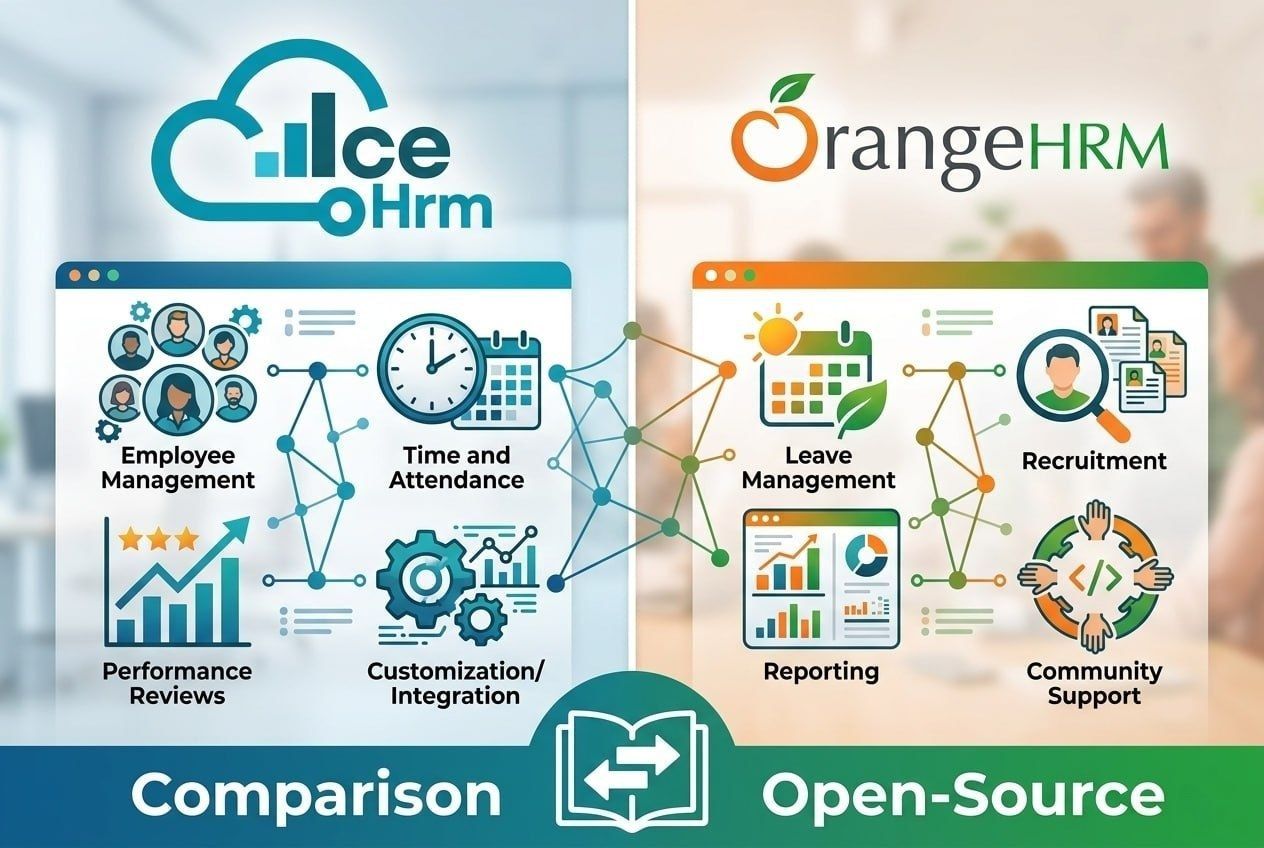
Comparing IceHrm and OrangeHRM? While OrangeHRM offers a legacy footprint and large community, it often comes with technical debt and "Request a Quote" pricing. IceHrm provides a modern, modular alternative with transparent, flat-fee pricing and full ELv2 source code access. See why newer is better....
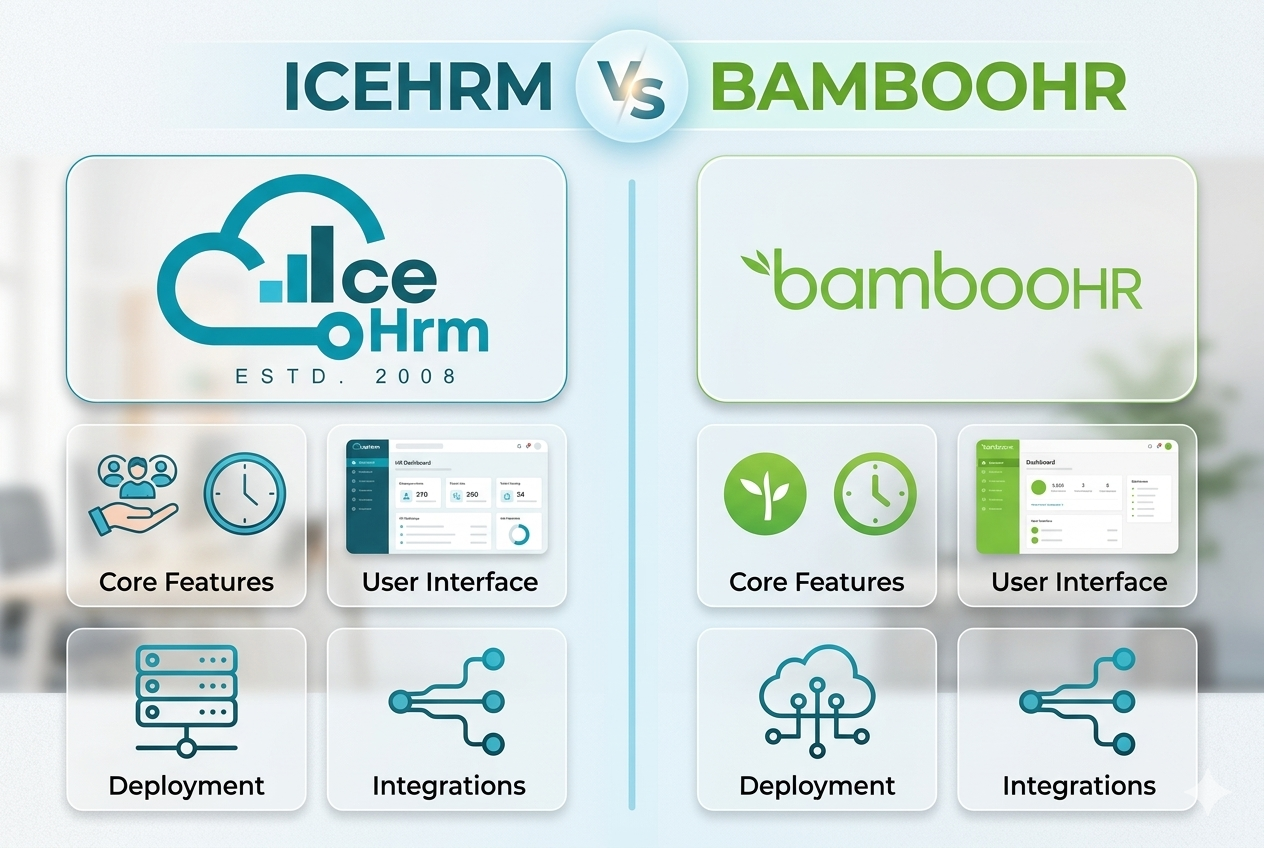
Choosing between IceHrm and BambooHR? While BambooHR offers a polished UX, it can cost $60k/year for 200 employees. IceHrm provides a powerful self-hosted alternative for just $2,499, offering total data sovereignty and global flexibility for cost-conscious, technical teams. Find your fit here....