Why HR Software Pricing Has Increased 40% Since 2023
Reading Time:
Reading Time:

For corporate finance directors, IT leaders, and operations executives, reviewing the annual technology budget has become a challenging task. Between 2023 and 2026, a quiet financial shift transformed Software-as-a-Service (SaaS) from a highly efficient utility into a rapidly expanding expense line.
Leading industry tracking data highlights that the average organization now spends roughly $9,100 per employee every year purely on SaaS subscriptions—a significant increase from the $7,900 benchmark recorded just two years ago. Software subscriptions now consume more than 21% of total corporate IT budgets, compared to a modest 13% just five years ago.
Nowhere is this financial pressure felt more acutely than in human resource departments. Over the past three years, the market has witnessed an unprecedented 40% cumulative HR software price increase. While general consumer price inflation across G7 economies stabilized around 2.7%, SaaS contract costs accelerated at more than four times that rate, with late enterprise renewal seasons peaking at a staggering 14.7% inflation rate.
When operations leaders search for answers regarding SaaS inflation HR trends (the rapid rising costs of cloud-based subscriptions), they are not just looking at standard market adjustments. They are uncovering a deliberate change in how public cloud vendors monetize their software—and searching for permanent alternatives to protect their bottom line.
To understand why employee management applications have become so expensive so quickly, we must look past generic economic explanations and examine the core structural factors driving public cloud vendor behavior.
   +-----------------------------------------------------------------------+
   |                  THE MODERN SAAS INFLATION ENGINE                     |
   +-----------------------------------------------------------------------+
   |                                                                       |
   | [Growth Pressure] --> New customer acquisition plateaus               |
   |                     --> Price hikes become primary revenue lever      |
   |                                                                       |
   | [AI Feature Bundles] --> Mandatory AI add-ons justify premium tiers   |
   |                        --> Masked price increases hide extra costs    |
   |                                                                       |
   | [High Switching Costs] -> Vendor captivity reduces bargaining power   |
   |                        -> 10-15% annual contract increases enforced|
   |                                                                       |
   +-----------------------------------------------------------------------+
During the previous decade of low interest rates, public cloud software providers focused heavily on aggressive customer acquisition. However, as global markets shifted and organic customer growth began to plateau, public software companies faced immense pressure from Wall Street to sustain their revenue expansion rates.
With new customer acquisition slowing down, software vendors realized that raising prices on their current, captured users was the fastest way to boost revenue. Industry analyses reveal that for many major SaaS providers, over 50% to 70% of their ongoing revenue growth now comes directly from price increases rather than winning new customers.
The rapid rise of generative artificial intelligence gave cloud vendors the perfect justification to adjust their pricing models. Instead of offering AI tools as completely optional extensions, more than 60% of mainstream vendors actively bundled these new features directly into their core software tiers.
By rebranding standard packages as "Premium Plus" or "Pro" tiers and stripping away the non-AI options, vendors effectively forced price increases of 15% to 40% onto buyers, regardless of whether their HR teams actually wanted or needed those specific AI modules.
Software vendors understand that human resource databases are the core operational system of record for any business. Migrating historical payroll data, restructuring complex leave compliance rules, retraining personnel, and rebuilding API integrations requires weeks of intense administrative effort.
Because the upfront cost and operational disruption of migrating to a new platform are so high, public cloud providers know that most enterprises will simply absorb an 11% to 14% annual renewal increase rather than face a disruptive system migration. This high level of customer captivity gives vendors incredible pricing power.
While rising base subscription rates are challenging enough, the real structural problem for growing businesses is the traditional Per-Employee-Per-Month (PEPM) billing model used by public cloud platforms.
   +-----------------------------------------------------------------------+
   |                 THE RECURRING PEPM EXPANSION PENALTY                  |
   +-----------------------------------------------------------------------+
   |                                                                       |
   |  [50 Active Employees]  --> Multi-Tenant SaaS Contract -> $6,000/yr   |
   |  [150 Active Employees] --> Multi-Tenant SaaS Contract -> $18,000/yr  |
   |  [500 Active Employees] --> Multi-Tenant SaaS Contract -> $60,000/yr  |
   |                                                                       |
   |   *Your software bill scales linearly with your success*              |
   |                                                                       |
   +-----------------------------------------------------------------------+
Under a standard per-user model, your software expenses scale linearly with your company's headcount. If an HR software suite charges a baseline of $10 per user each month, a business with 50 employees pays a manageable $6,000 annually. However, when that business scales up its operations to support 150 team members, that annual software bill climbs to $18,000. By the time the enterprise expands to 500 personnel, the recurring cost surges to $60,000 every single year—all for the exact same software engine.
This pricing structure forces an ongoing financial penalty onto your company simply for expanding its workforce. It means that achieving your corporate growth goals automatically triggers higher software costs, turning your internal administrative tools into a highly volatile, unpredictable operational expense.
To break free from this cycle of escalating subscription fees, forward-thinking operations directors are moving toward an asset-based technology model. By choosing to buy a lifetime HRMS license for a clear, one-time flat fee of $2,499, your company secures permanent technology ownership.
   +-----------------------------------------------------------------------+
   |                 FLAT-FEE ONE-TIME INVESTMENT PROFILE                  |
   +-----------------------------------------------------------------------+
   |                                                                       |
   |     Year 1: Asset Core Engine Purchase                  --> $2,499    |
   |     Year 2: Optional Maintenance & System Updates       --> $499      |
   |     Year 3: Optional Maintenance & System Updates       --> $499      |
   |                                                                       |
   |   TOTAL THREE-YEAR OUTLAY: $3,497 (Supports Uncapped User Accounts)   |
   |                                                                       |
   +-----------------------------------------------------------------------+
Choosing a standalone system means your total software licensing cost over three full operational years lands at a highly predictable $3,497. This investment remains completely identical whether your active workforce supports 45 core team members, 250 factory workers, or over 2,000 personnel distributed across multiple global offices. By removing volatile per-user billing models, your software shifts from an unpredictable recurring expense into a stable capital asset, allowing your finance team to reallocate valuable capital directly into core product innovation or market expansion.
A major challenge with standard enterprise applications is that public SaaS providers often force companies to pay for heavy, complex software packages long before their team is actually ready to use them. A modular system design avoids this problem entirely by ensuring your platform scales at the exact pace of your actual business operations.
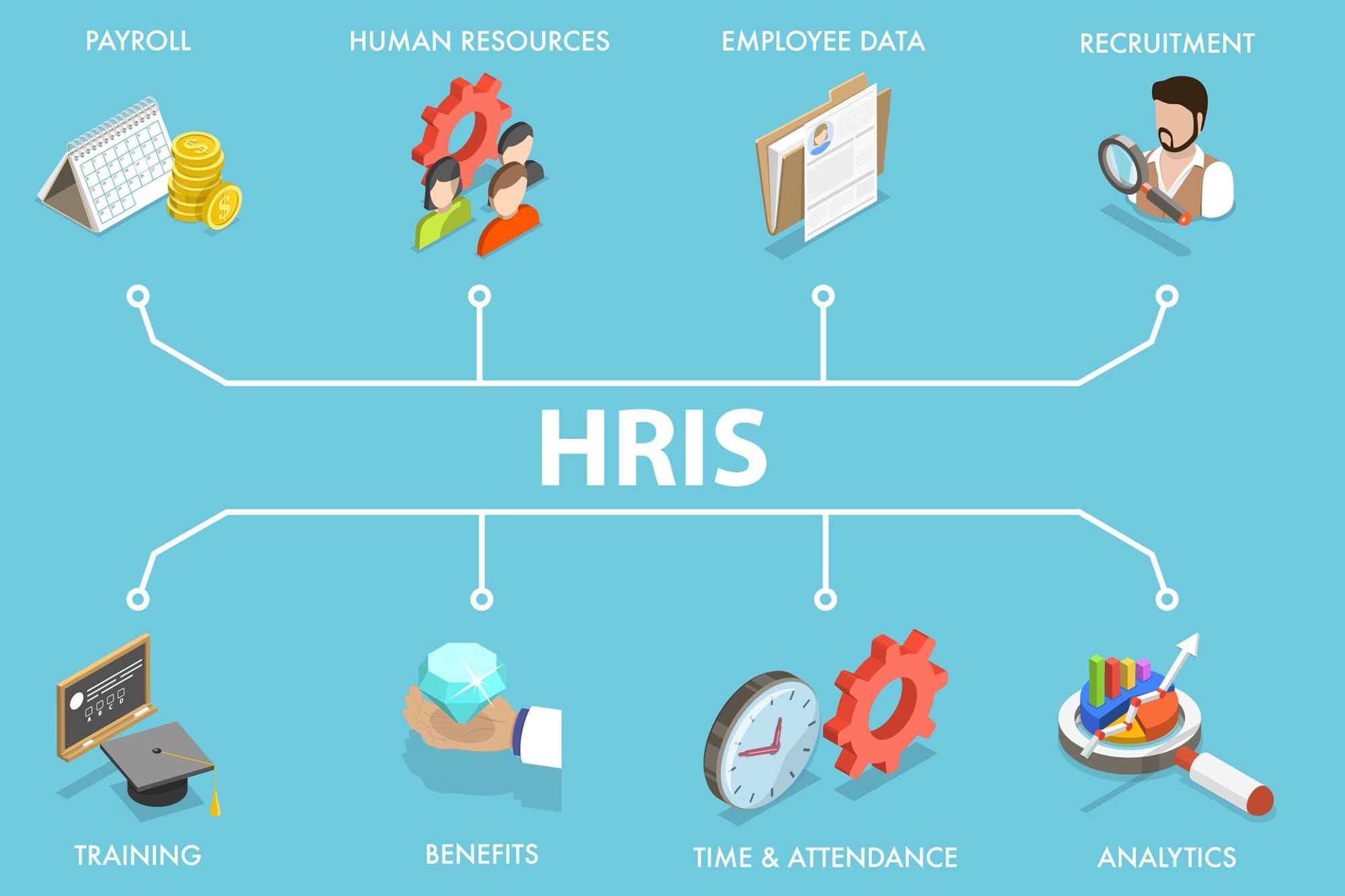
Instead of signing up for bloated, all-in-one corporate bundles, organizations can choose to buy individual HRIS software modules as their operational needs evolve. This highly flexible approach lets you activate advanced enterprise features one by one, keeping your administrative interface clean, fast, and easy for your staff to adopt:
For security-conscious enterprises, financial institutions, and technology providers, managing where sensitive employee data lives is just as critical as controlling software costs.
"Forcing an enterprise into a shared multi-tenant public cloud—meaning a shared network space where your records sit on the same server as thousands of other companies—means your sensitive company records, including employee banking credentials, tax identifiers, and internal performance logs, live exposed alongside data from external organizations."
True data privacy requires moving away from shared cloud environments entirely. By leveraging a source-available architecture, your technical team can deploy a stable, production-ready environment onto your private cloud network using standard, affordable self-hosted infrastructure pricing tiers.
   +-----------------------------------------------------------------------+
   |                 THE SECURE ENTERPRISE DATA OUTLINE                    |
   +-----------------------------------------------------------------------+
   |                                                                       |
   |  [Core Code Engine]  ---> Deployed to Secure Private Cloud Space      |
   |                      ---> 100% Data Sovereignty & Compliance Control  |
   |                      ---> Isolated Single-Tenant Database Storage     |
   |                                                                       |
   +-----------------------------------------------------------------------+
Deploying your platform via independent hosting infrastructure gives your firm absolute data control under a GDPR-compliant HR management system design. It ensures your employee records are fully protected on an isolated database that belongs entirely to your business, giving your legal team complete confidence during rigorous compliance audits.
Furthermore, a source-available design gives your internal developers full visibility into the system's codebase. To align the application perfectly with your precise internal workflows or build unique localized reporting tools, you can leverage specialized custom enterprise HR development services to safely modify the core system layout.
Partnering with experienced software infrastructure teams ensures your platform adapts perfectly to your precise business rules, allowing your team to connect custom biometric tracking hardware or hook into specific regional banking networks seamlessly.
For growing companies that want the absolute security of single-tenant data isolation but prefer to keep their internal IT teams completely focused on core product development, moving your setup to a dedicated secure single-tenant managed cloud hosting container tier offers an excellent middle ground.
Deploying through a secure managed cloud environment provides an isolated single-tenant container entirely maintained by expert infrastructure teams. This approach combines the hands-off convenience of a traditional SaaS application with the complete cost predictability, deep customization options, and absolute data privacy of flat-fee software.
Running your platform through a dedicated managed tier keeps your system perfectly secure and fully optimized without any unexpected pricing spikes as your company scales its headcount.
Selecting the ideal deployment path requires carefully balancing your company's available internal IT support, long-term operational budget, and specific data security compliance needs.
By breaking free from rigid, per-user public cloud software bundles and moving your employee management workflows to a dedicated standalone platform, you protect your company from escalating software costs today while giving your entire organization the perfect foundation to scale smoothly for years to come.
True operational stability is achieved best when your administrative platforms protect both your data privacy and your financial bottom line, which is achieved most effectively by deploying an independent human resources infrastructure that belongs entirely to your business.