HR Software Buying Mistakes to Avoid in 2026
Reading Time:
Reading Time:

In the high-stakes environment of 2026, choosing a scalable Human Resource Information System (HRIS) is no longer just an administrative task—it is a foundational business decision. With the rapid rise of decentralized workforces and the increasing complexity of data privacy laws, the wrong choice can lead to multi-year tech debt that stifles growth and frustrates your most valuable asset: your people.
Too often, companies approach the procurement process with a "feature-first" mindset, seduced by glossy vendor presentations and AI-powered buzzwords. However, the graveyard of failed software implementations is littered with platforms that looked exceptional in a slide deck but utterly failed in day-to-day operations.
To protect your organization, you must look past the interface. Here are the most critical HR software mistakes to avoid this year if you want to find the best HR software platforms for your team.
The most common mistake in 2026 is buying for the company you think you might be in five years, rather than the one you are today. Enterprise vendors love to bundle complex, unproven modules—AI sentiment analysis, predictive turnover modeling, and VR onboarding—into their premium pricing tiers.
"Buying software features you don't use is like paying for a 10-bedroom mansion when you only live in two rooms. You're still paying for the heating, the taxes, and the maintenance on the empty space."
The Reality: Most mid-market companies only utilize about 40% of the features they pay for in a high-tier SaaS subscription. This unnecessary feature bloat clutters the user experience for employees and complicates system administration.
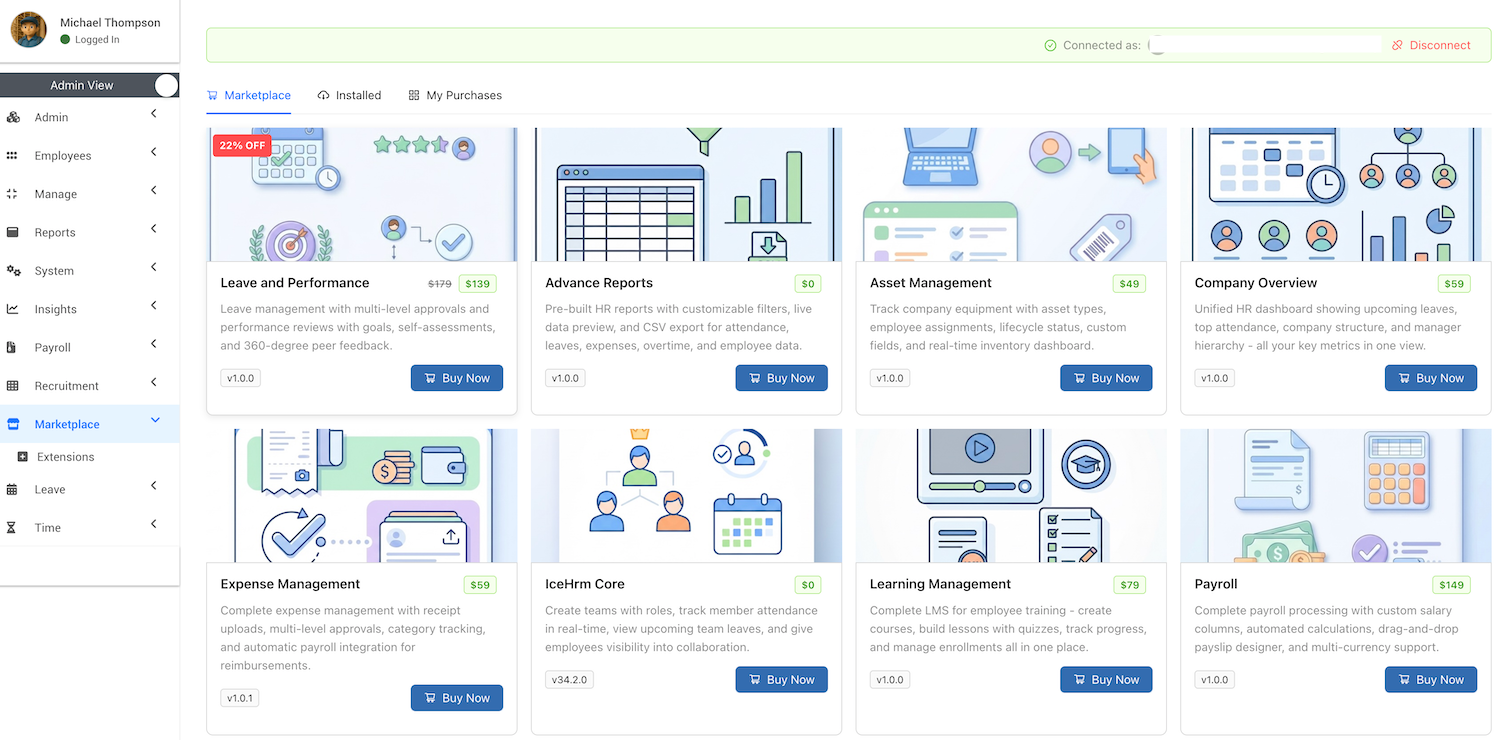
The Fix: Look for flexible, modular configurations. Platforms like IceHrm allow you to buy specific HR software modules only when you actually need them. Start with a solid foundation—including automated payroll software modules, streamlined leave management tracking, and a secure employee information database—and scale up as your organizational maturity grows.
Many buyers fall in love with the visual "sticker price" of a Per-Employee-Per-Month (PEPM) subscription model. It looks highly affordable at $12 per employee, but the underlying financial math changes rapidly as your head count scales.
The Hidden Costs of 2026:
The Fix: Calculate your complete TCO over a distinct 3-year and 5-year horizon. This is precisely where transparent, flat-fee licensing models excel. For instance, selecting IceHrmPro’s flat-rate HR software pricing for a flat $2,499 covers unlimited employees. When compared directly to an enterprise SaaS provider charging $15 PEPM for 250 employees ($45,000/year), the massive difference in TCO becomes clear.
In 2026, no software application safely exists in a isolated vacuum. A recurring HRMS buying mistake is blindly accepting a vendor's blanket claim that they "integrate with everything" without reviewing their live developer infrastructure.
The Trap: "Integration" often just translates to a manual, time-consuming CSV spreadsheet upload and download process. If the integration isn't fully automated or built via a robust API, your internal HR team will spend hours every week acting as human middleware, manually syncing data lines between your HRIS, payroll provider, or corporate ERP.
The Fix: Request access to the vendor's open-source HR software API documentation upfront. If your technical team cannot easily review it, walk away. Prioritize platforms that complement their software with managed hosting and deployment services to help build and maintain these automated data bridges so your workforce insights remain consistent across all ecosystems.
Vendor lock-in is a silent killer of corporate agility. Many corporate buyers realize far too late that their historical workplace data is effectively held hostage inside a proprietary, closed-source black box.
"Data sovereignty is the true insurance policy of the digital age. If you don't have a clear, unhindered path to export your structural data and take it elsewhere, you don't truly own your company's history."
The Risk: Several cloud-only providers make it notoriously difficult, complex, or expensive to extract a full SQL database dump if you decide to cancel your subscription. You might receive a handful of flat spreadsheets, but you instantly lose the structural relationships between data points, the security audit logs, and critical historical context.
The Fix: Prioritize absolute data ownership from day one. Choosing self-hosted open source HRMS platforms or a secure private cloud HRIS infrastructure ensures that the underlying database remains your permanent corporate property. With a solution where the source code is accessible and the database is yours, you possess a built-in exit strategy. You partner with your vendor because you choose to, not because you are trapped by technical constraints.
Software solutions rarely fail technically; the failure happens at the human layer. A common misstep is managing an HRIS rollout exclusively as a back-end IT project without employee onboarding considerations.
The Symptom: The software is officially launched, but managers quietly continue to use their own disconnected spreadsheets for tracking leave, and employees complain that the mobile interface adds friction to their workday.
The Fix: Invest in professional implementation services that place a heavy emphasis on organizational change management, not just raw data migration. Ensure the system emphasizes intuitive Employee Self-Service (ESS) features that demonstrably save workers time, rather than introducing more administrative digital forms to their plate.
Even if your entire operations are 100% domestic today, the cross-border remote work landscape means your next key hire could be situated in a completely different country with entirely unique labor laws, tax withholding requirements, and regional holiday calendars.
The Mistake: Contracting a highly US-centric platform (which describes many popular VC-funded SaaS tools) that cannot natively process multi-currency payroll or localized leave structures without purchasing expensive international add-on packages.
The Fix: Select an HRIS engineered from inception with a global engine. Look for rules-based logic engines that allow administrators to customize payroll parameters and regional leave rules for different geographic cohorts. This innate international agility is a core strength of IceHrm's flexible HR software architecture, which was purposefully built to adapt to diverse global labor frameworks right out of the box.
To avoid these common industry pitfalls, ensure your final software selection checks every box on this criteria list:
The single greatest HR software mistake is settling for a platform that views your growing business as just another recurring subscription entry. In 2026, you require a strategic platform partner that delivers absolute financial transparency, complete data ownership, and the open flexibility to scale entirely on your own terms.